

Causey Arch: Where the Railway Age Truly Begins
- David Wilkin
- Nov 13, 2025
- 2 min read

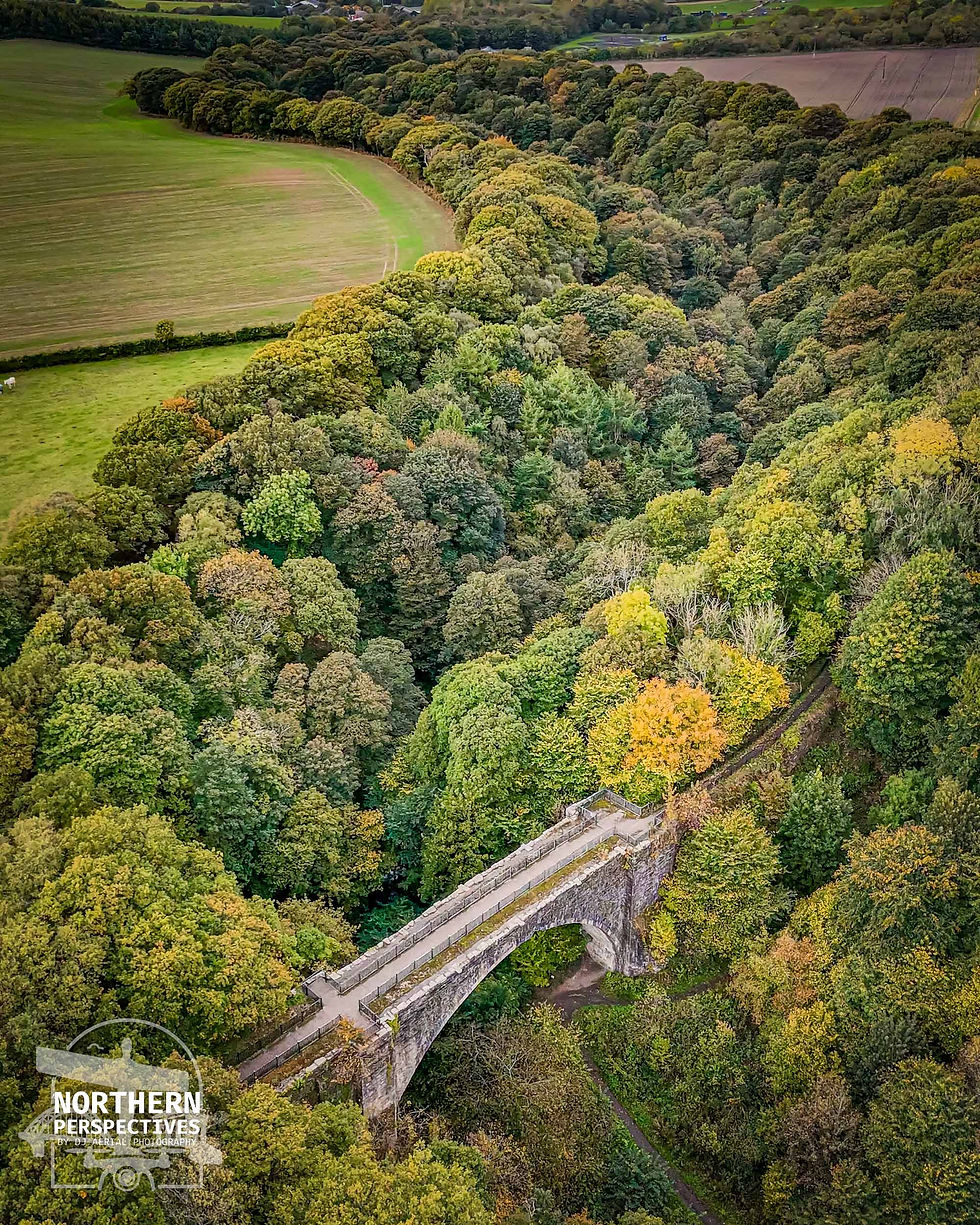
Long before steam locomotives thundered across the country, and long before the Stockton & Darlington Railway changed the world, the seeds of the rail revolution were already being planted in the Durham coalfield. One of the clearest reminders of that early innovation is the Causey Arch — an extraordinary structure built in 1725–26 to carry the Tanfield Wagonway across the ravine at Causey Burn.
The bridge was constructed to transport coal from the pits around Tanfield and Stanley towards the River Tyne. But unlike the iron railway bridges that would come a century later, Causey Arch was made entirely of stone. Its single 31-metre span was the longest of its kind in the world when it opened, and remains the oldest surviving purpose-built railway bridge anywhere. The workers who built it seldom saw this kind of engineering on such a scale, yet they produced something so strong it’s still standing nearly 300 years later. Legend has it that the master mason feared the arch would collapse under its own weight and tragically took his own life before the first wagons crossed — only for the structure to stand firm, just as it still does today.
Walking across it now, surrounded by the quiet woodland of Causey Woods, it’s easy to forget just how revolutionary this place once was. From above, the gentle curve of the arch cuts cleanly through the landscape, a single stroke of early industrial ambition set against nature’s backdrop. It marks the point where transportation began to evolve from rough tracks to engineered routes, paving the way for the railways that would change the world.
A peaceful place today — but one built on the determination, innovation, and graft that shaped the North East.


Comments