

Smardale Viaduct – Victorian Engineering in a Quiet Cumbrian Dale
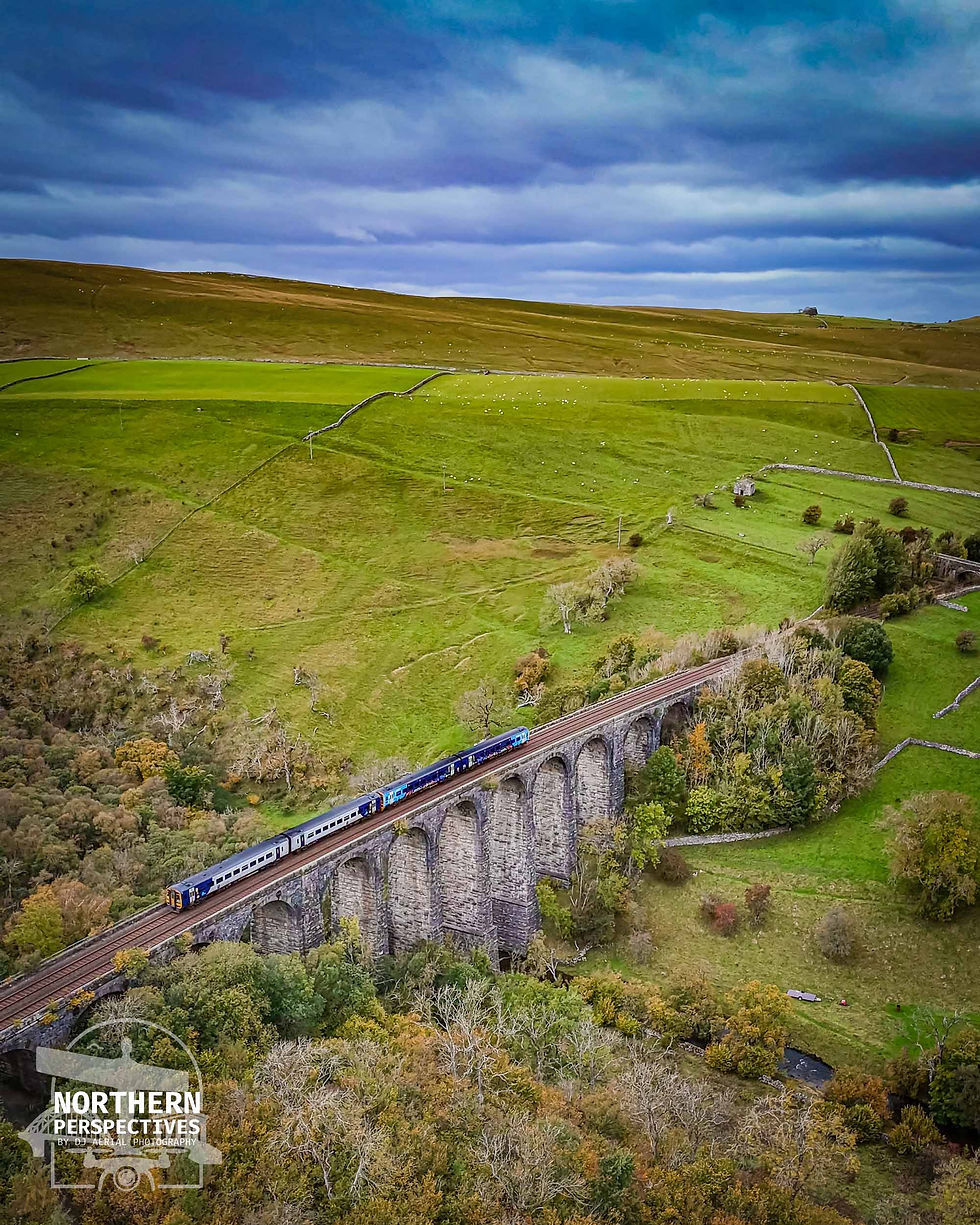
Smardale Viaduct spans the steep valley cut by Scandal Beck, forming part of the old South Durham and Lancashire Union Railway built in the 1860s. This line linked the iron and coal industries of the North East with the furnaces of the North West, and the viaduct was one of its major engineering achievements. Constructed from local limestone, the structure stands around 40 metres high and is supported by fourteen broad arches, giving it a graceful but imposing presence in one of the most rural corners of Cumbria. The railway closed to traffic in the 1960s, but the viaduct survived thanks to its sheer robustness and the efforts of preservation groups who recognised its historic importance.
Captured from above, the viaduct weaves through the landscape in a way that highlights just how ambitious Victorian railway building really was. The rolling fells, patchwork fields, and scattered farmsteads surrounding Smardale generate a feeling of complete isolation, making the presence of such a vast man-made structure all the more striking. Watching a modern train cross its length adds a rare moment of movement to a place that otherwise feels timeless, and the aerial view shows the viaduct not just as a relic, but as a living part of the valley’s story.


Comments